Whale Watching in Oaxaca Coast, Mexico
Humpback whales arrive in the warm offshore waters of the Oaxaca Coast from December through March, migrating from their cold-water feeding grounds to breed and calve in the protected Pacific. January and February are peak months — the whales are present in numbers, the seas are at their calmest, and the combination of flat water and blue sky makes for whale watching conditions that the shoulder months can't reliably deliver.
Humpback whales arrive in the warm offshore waters of the Oaxaca Coast from December through March, migrating from their cold-water feeding grounds to breed and calve in the protected Pacific. January and February are peak months — the whales are present in numbers, the seas are at their calmest, and the combination of flat water and blue sky makes for whale watching conditions that the shoulder months can't reliably deliver. Tours depart from Puerto Escondido and Huatulco, running offshore to where the whales are feeding and socializing. Breaching is common enough here to feel like a reasonable expectation rather than a lucky sighting, and on calm mornings the sound of a humpback surfacing travels across the water before the whale comes into view.
Weather & Conditions
Showing viable months only — May, Jun, Jul, Aug, Sep, Oct, Nov are off-season for this activity.
| Month | High / Low | Rain Days | Conditions |
|---|---|---|---|
| Jan | 88° / 70°F | 2 | Peak |
| Feb | 89° / 71°F | 1 | Peak |
| Mar | 91° / 73°F | 1 | Peak |
| Apr | 93° / 75°F | 4 | Good |
| Dec | 88° / 70°F | 2 | Okay |
Where to Go
Zicatela surf, restaurants, and the main airport.
Sea turtles, Punta Cometa, and the bohemian coast.
Nine reef bays, snorkeling, and the eastern end of the coast.
Brutalist solar villas, Punta Pájaros
Arched beachfront suites, La Barra de Colotepec
Know Before You Go
The Zicatela break in Puerto Escondido is nicknamed the Mexican Pipeline for a reason. It is a heavy, fast beach break that has broken bones and held down experienced surfers. If you are not an advanced surfer, watch from the sand or head to Carrizalillo or Playa Mermejita. The current does not negotiate.
From May through October, the humidity on the Oaxaca Coast is not a mild inconvenience — it is a physical presence. Temperatures regularly hit 33°C with 85%+ humidity. Plan outdoor activity before 9am or after 4pm. The hotels are designed for it; the jungle hikes are not.
There is no direct coastal road between Puerto Escondido and Mazunte. Every transfer goes inland on Highway 200, then back down. What looks like 45 minutes on a map is often 90 minutes in a colectivo. Arrange private transfers for anything time-sensitive, and confirm road conditions after heavy rain.
Ready to plan your whale watching window?
Tell us when and how you travel — we'll match it to the right months, the right properties, and the right price.
Hotels & Lodges for Whale Watching
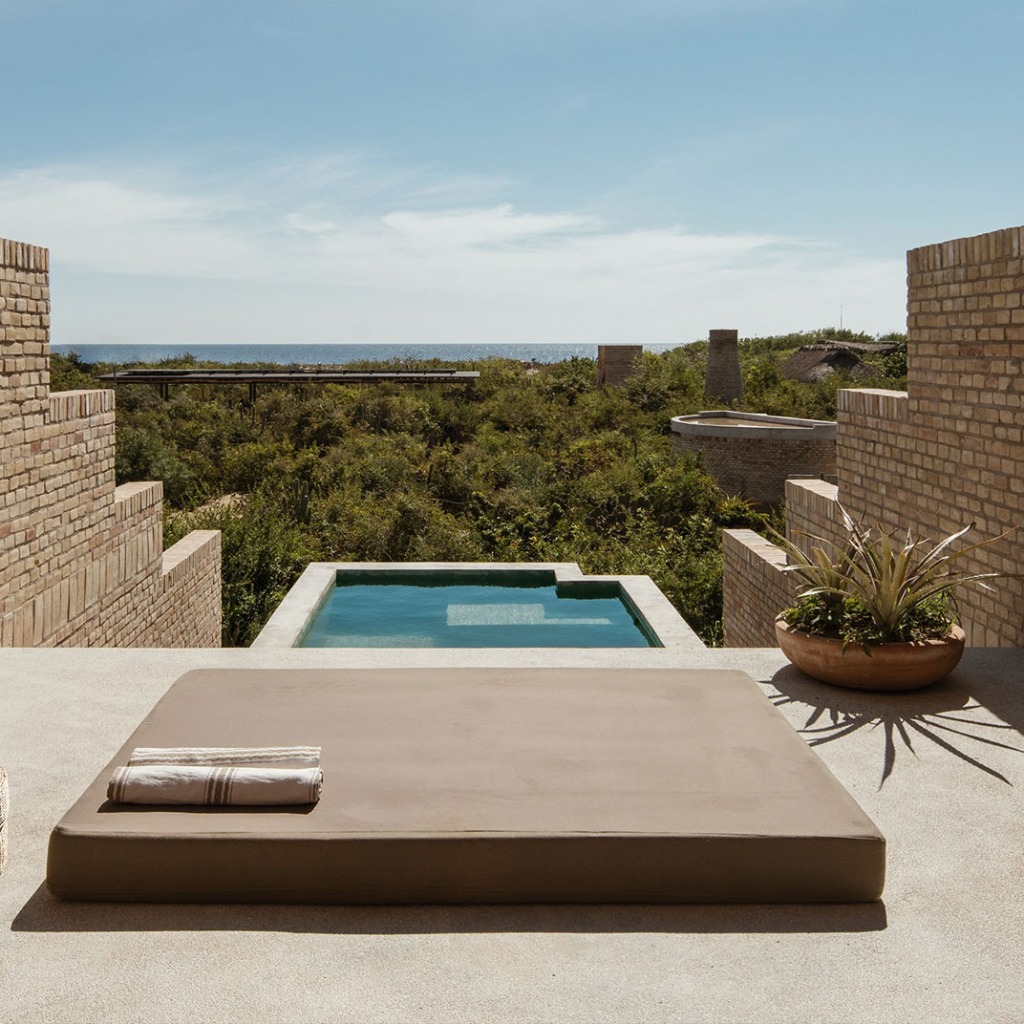
Hotel Terrestre
A Grupo Habita masterpiece by Alberto Kalach — 14 brutalist, solar-powered villas built from materials sourced within one kilometer of the site, set between the jungle and Punta Pájaros beach west of Puerto Escondido.
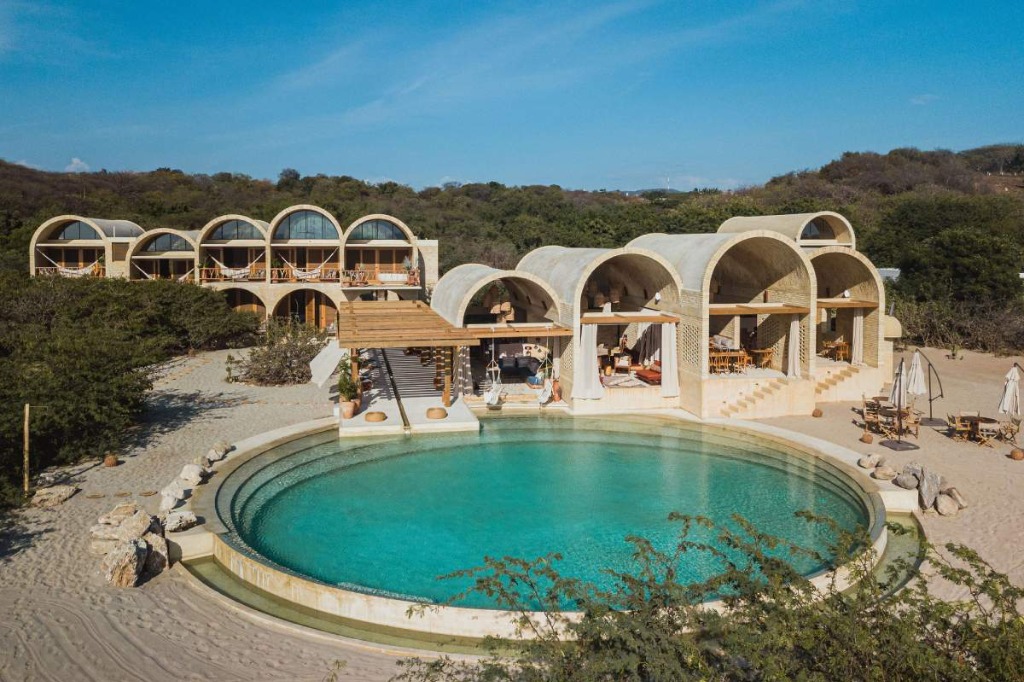
Casona Sforza
Eleven adults-only suites housed inside soaring brick vaults designed by Alberto Kalach, sitting directly on the beach at La Barra de Colotepec where the Colotepec river delta meets the Pacific — a Michelin Key property and one of the most architecturally distinctive small hotels in Mexico.