Stargazing & Aurora in Lofoten Islands, Norway
Lofoten's Northern Lights are among the most photographed aurora in the world, and the reason is not just the aurora itself but the backdrop. The red rorbuer at Hamnøy reflected in still black water, lit from above by a curtain of green light — it is an image that appears on every photography list in the northern hemisphere and that remains extraordinary in person.
Lofoten's Northern Lights are among the most photographed aurora in the world, and the reason is not just the aurora itself but the backdrop. The red rorbuer at Hamnøy reflected in still black water, lit from above by a curtain of green light — it is an image that appears on every photography list in the northern hemisphere and that remains extraordinary in person. At 68 degrees north, Lofoten needs only a Kp index of 2 for aurora activity — activity present on hundreds of nights per year when skies are clear. The season runs from late September through late March when nights are long enough for darkness; in summer the midnight sun makes aurora invisible entirely.
Weather & Conditions
Showing viable months only — Apr, May, Jun, Jul, Aug are off-season for this activity.
| Month | High / Low | Rain Days | Conditions |
|---|---|---|---|
| Jan | 34° / 27°F | 15 | Peak |
| Feb | 34° / 27°F | 13 | Peak |
| Mar | 37° / 28°F | 12 | Peak |
| Sep | 55° / 44°F | 13 | Good |
| Oct | 46° / 37°F | 15 | Peak |
| Nov | 39° / 32°F | 15 | Peak |
| Dec | 35° / 28°F | 16 | Peak |
Where to Go
The most photographed village in Norway. Red rorbuer beneath dark peaks. Base for Reinebringen and southern island hiking.
The bridge view — classic Northern Lights reflection shot. One kilometre from Reine.
The iconic Lofoten hike. Sherpa-built stone staircase, 500m elevation gain, view over Reinefjorden. 3 hours roundtrip.
545m summit with view over Kvalvika, one of the finest beaches in Norway. 4 hours roundtrip. Can descend to the beach.
World's most northerly surf school. Consistent west-northwest swell. Best October–March for surf. Unstad Arctic Surf camp.
Largest town. Airport, ferry terminal, shops, restaurants. Base for northern island exploration and whale-watching tours.
The Venice of Lofoten — a village built across tiny islets. Galleries, restaurants, climbing wall, active fishing harbour.
UNESCO-listed historic fishing village. Museum, art gallery, rorbuer accommodation. One of the best-preserved in Norway.
Norway's largest puffin colony. Only reachable by ferry. Bird cliffs with Atlantic puffins, kittiwakes, gannets. June–August only.
One of the finest Northern Lights viewing spots. Remote lighthouse, open horizon, minimal light pollution.
The single road linking the archipelago end to end. 170km from Å to the mainland bridge at Fiskebøl.
Know Before You Go
The aurora forecast requires two independent conditions: geomagnetic activity (Kp index 2 or above) and clear skies. Both need to cooperate simultaneously. Lofoten's coastal weather is fast-moving and frequently cloudy — a clear forecast can cloud over in an hour. Book a minimum of four to five nights during aurora season and be prepared to drive to the leeward side of whichever island has the clearest sky. Use the PolarForecast app for Lofoten-specific hourly aurora forecasts.
The car ferry from Bodø to Moskenes takes 3.5 hours and arrives directly in the southern islands near Reine — the most dramatic part of the archipelago. In summer it operates daily but fills well in advance for vehicles. Book online through Torghatten Nord as soon as your dates are confirmed. Without a car booking, you may face a very long wait or be forced to use the foot-passenger service and arrange a rental car on the island.
Reinebringen is the most hiked trail in Lofoten and the car park at Djupfjord fills completely by 9am on summer weekends. The solution is straightforward: start before 7am. In June and July this means hiking in full daylight at midnight or 5am — both perfectly viable under the midnight sun. The summit in early morning or late evening light, with the village of Reine below and almost no other hikers, is a completely different experience from the midday crowd.
Ready to plan your stargazing & aurora window?
Tell us when and how you travel — we'll match it to the right months, the right properties, and the right price.
Hotels & Lodges for Stargazing & Aurora
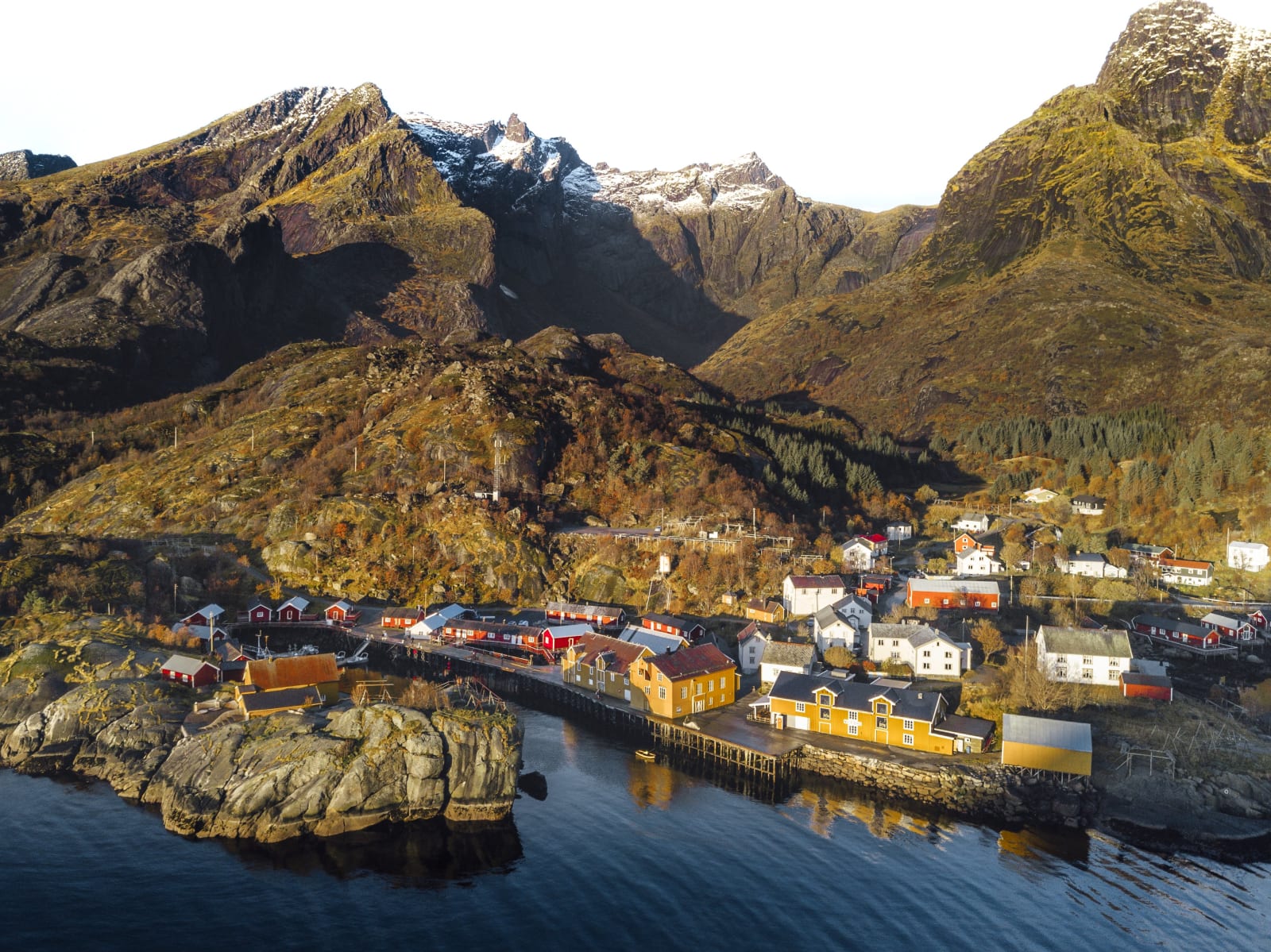
Nusfjord Arctic Resort
A historic preservation resort of classic red fisherman cabins set within a steep, isolated fjord in a preserved fishing village.
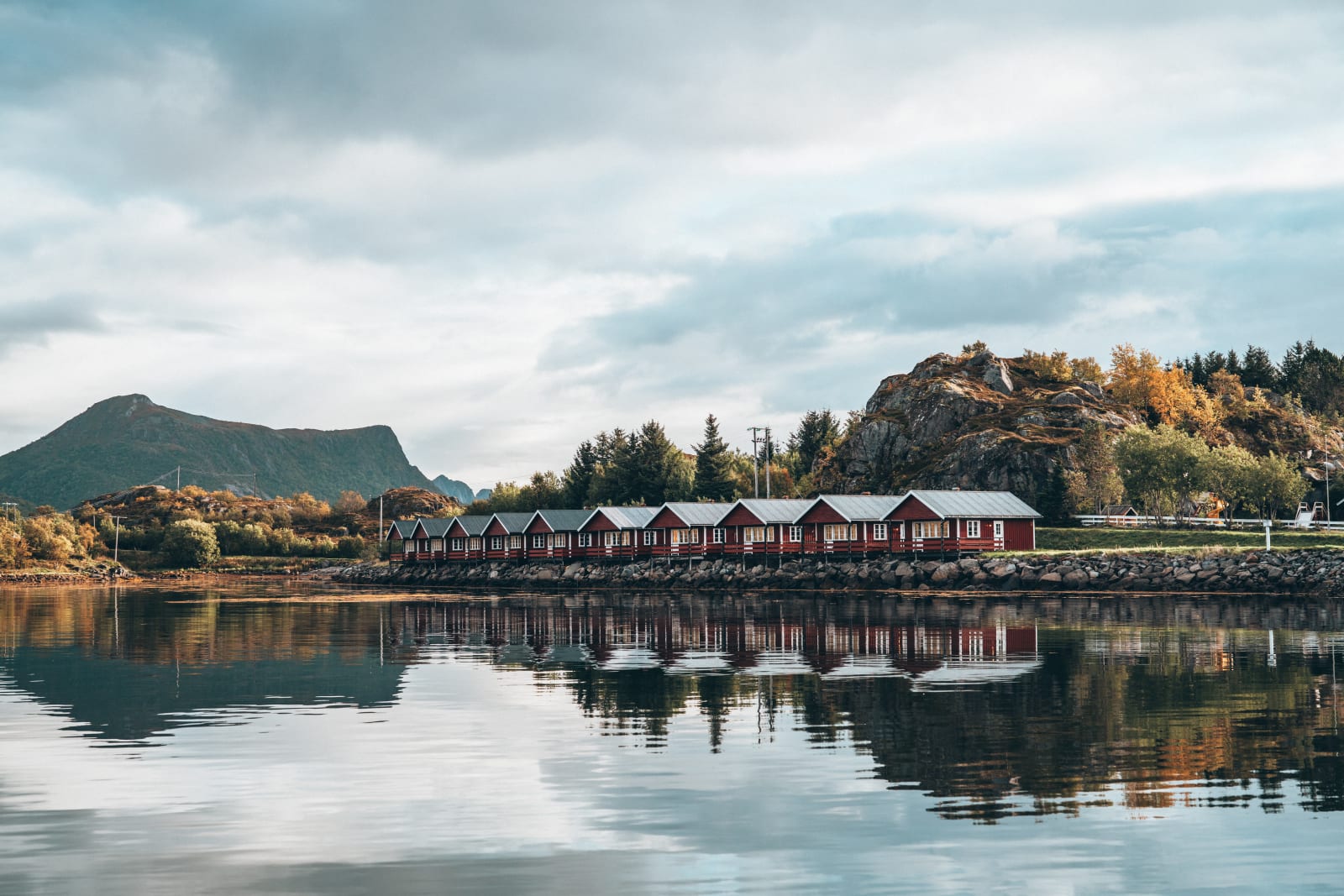
Skårungen
A design-forward waterfront camp overlooking the Vestfjorden under Mount Vågakallen, combining modern cabins and a fjord-side sauna.