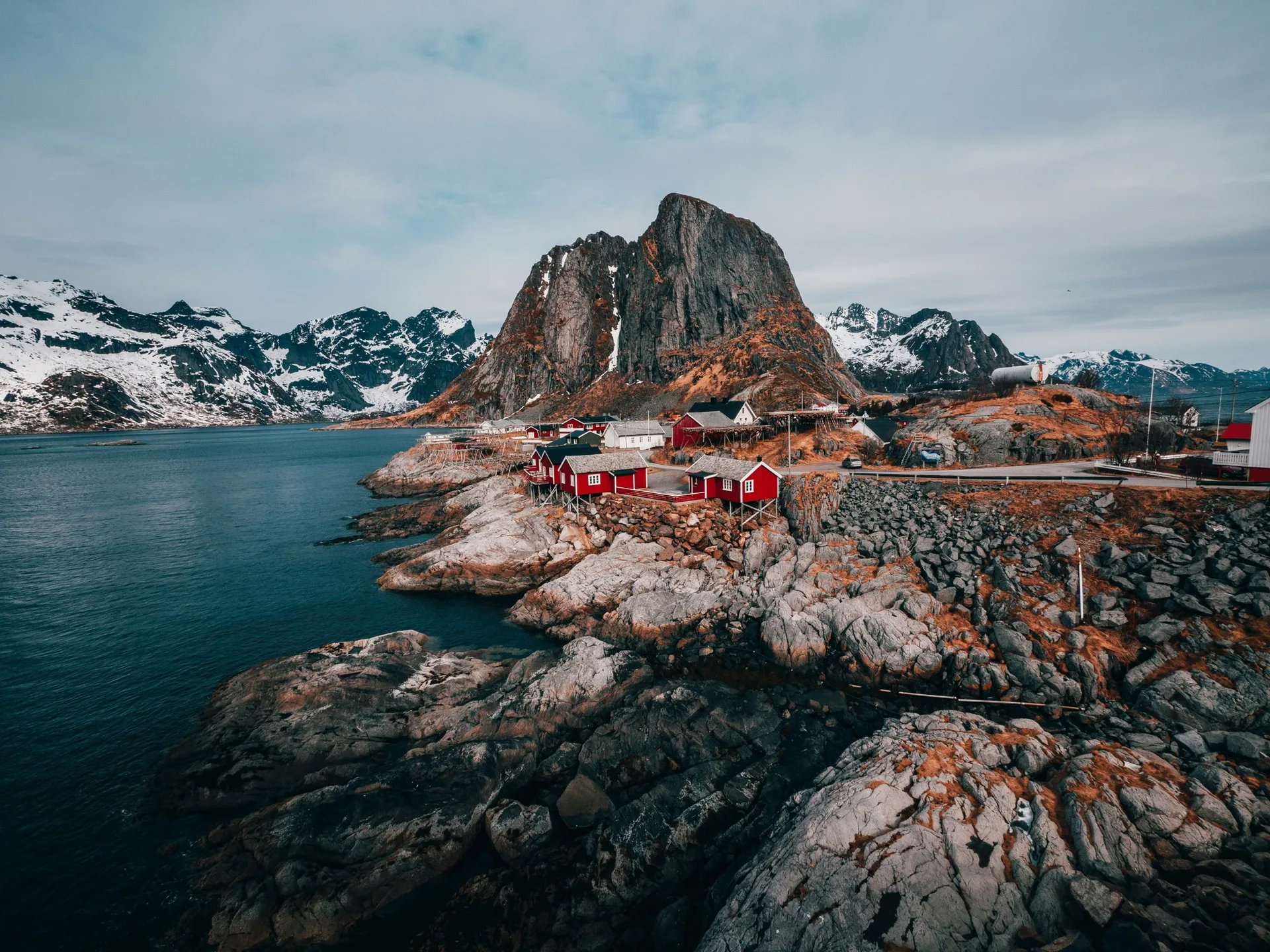
Lofoten Islands, Norway
Hiking Reinebringen above Reine at midnight in the summer sun, watching the Northern Lights reflect in the still water at Hamnøy bridge, and surfing the Arctic break at Unstad in a 5mm wetsuit.
Lofoten has a problem that most destinations would envy: it became famous before the infrastructure could absorb the attention. Reine — the village of red rorbuer beneath dark peaks, reflected in still water — is one of the most photographed places in Europe, and in July the road through it is slow, the parking full, and the rorbuer booked months in advance.
Lofoten has a problem that most destinations would envy: it became famous before the infrastructure could absorb the attention. Reine — the village of red rorbuer beneath dark peaks, reflected in still water — is one of the most photographed places in Europe, and in July the road through it is slow, the parking full, and the rorbuer booked months in advance. This is solvable. The honest answer is that Lofoten works best for people who understand the two-season logic and choose accordingly.
When to visit
Bar height = overall visitability. Color = conditions tier.
Lofoten in summer and Lofoten in winter are not the same place. Summer delivers 24-hour daylight, hiking on open trails, kayaking in flat fjords, and puffins on Røst. Winter delivers the polar night, Northern Lights above the rorbuer, orcas in the fjords, and the skrei fishing season that has run since the 12th century. Decide which experience you want before you book — trying to do both in one trip requires at least two weeks and some uncomfortable shoulder-season timing.
July is the peak month — busiest, most expensive, and fully booked months ahead. August delivers almost identical conditions with 19+ hours of daylight, all trails and services open, and significantly fewer visitors. Prices drop noticeably after the first week of August. For most summer visitors, August is the correct answer.
What's good, and when
June: Midnight Sun Peak
Hiking Reinebringen at midnight in June — the sun on the horizon, the fjord below lit in amber, the village of Reine in complete silence — is one of the genuinely otherworldly experiences that makes Lofoten unlike anywhere else.
Ready to plan your trip?
Tell us when and how you travel — we'll match it to the right months, the right properties, and the right price.
Hotels & Lodges
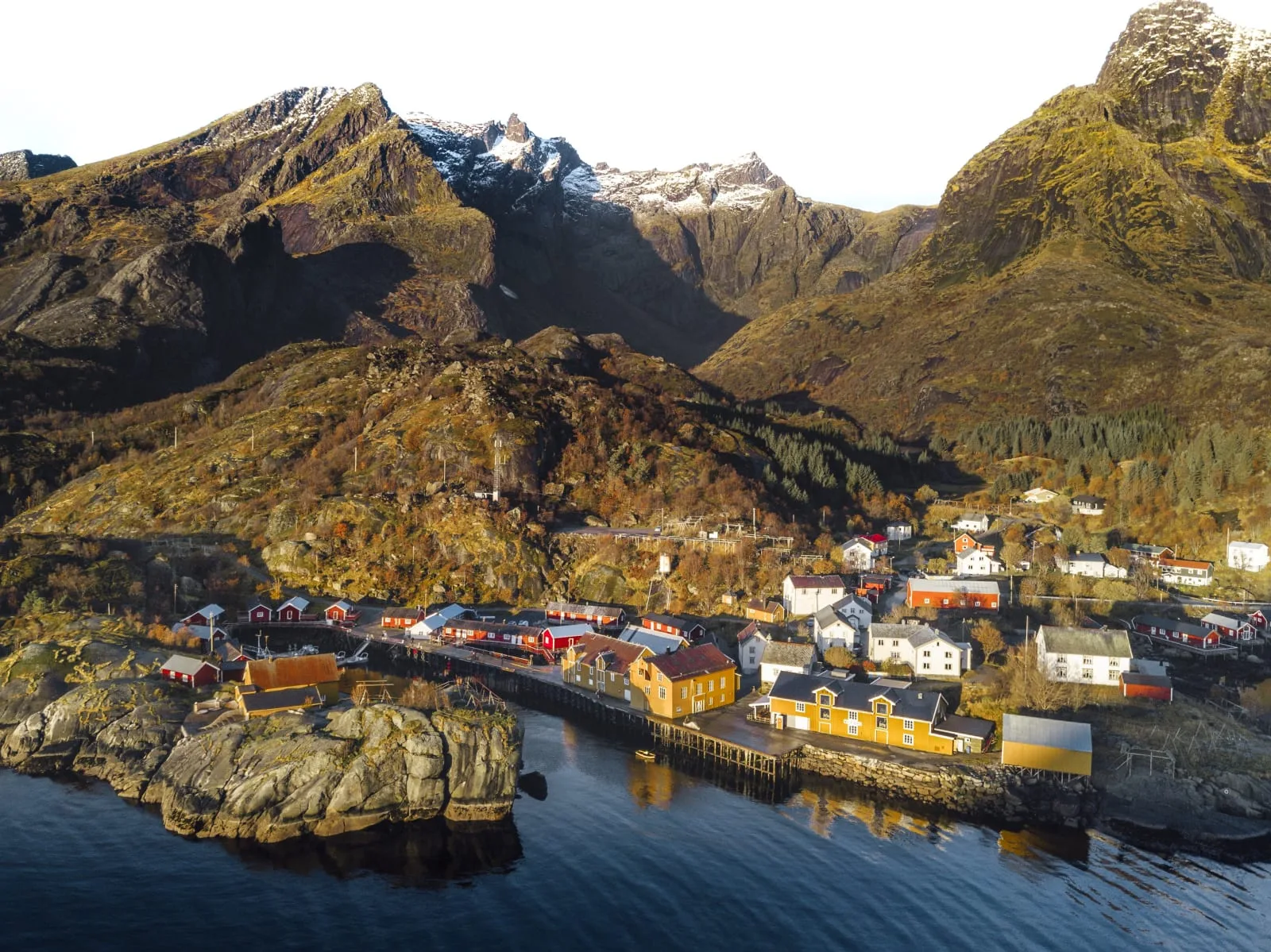
Nusfjord Arctic Resort
A historic preservation resort of classic red fisherman cabins set within a steep, isolated fjord.
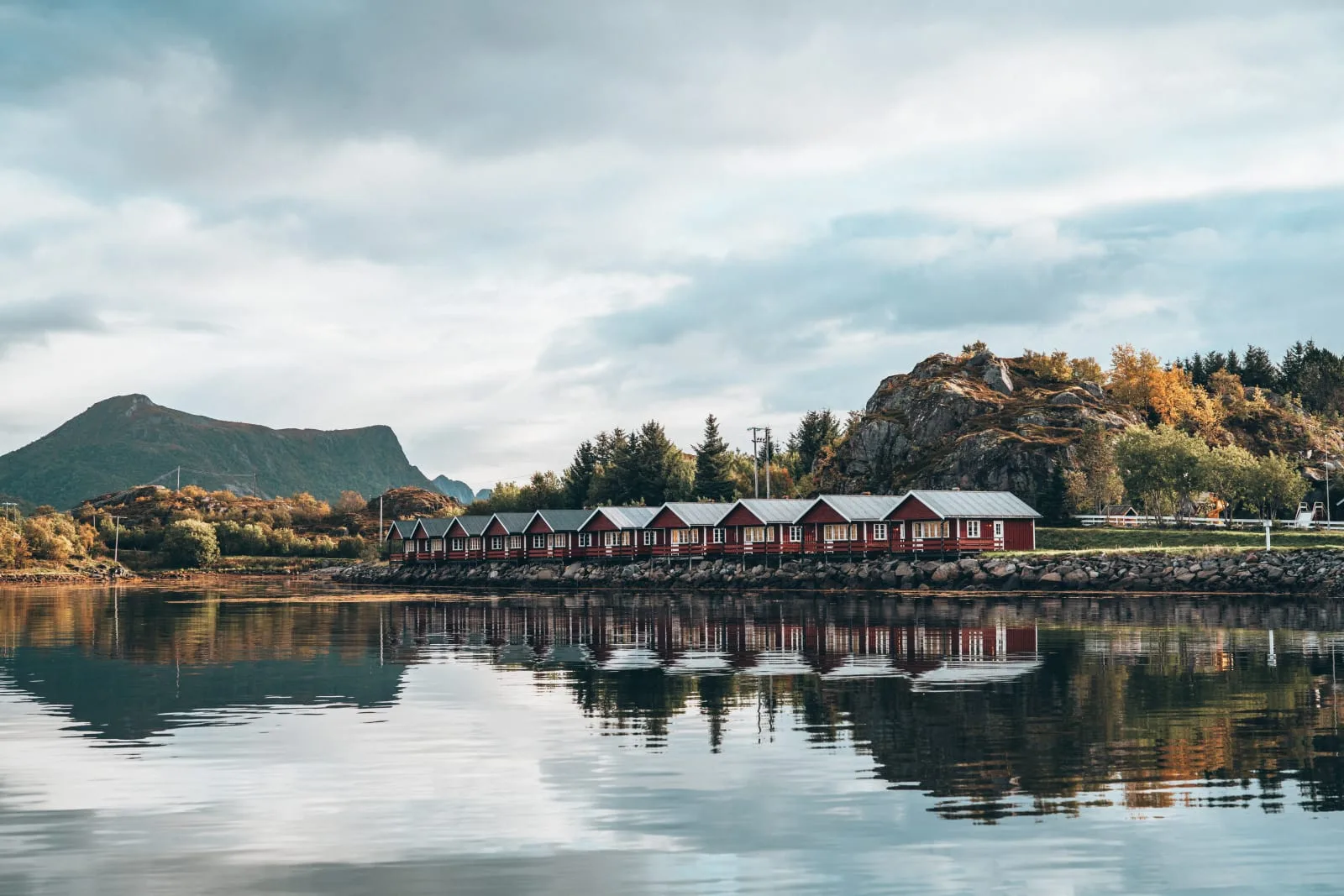
Skårungen
A design-forward waterfront camp overlooking the Vestfjorden, offering a raw connection to Lofoten's marine life.
The Reality Check
Northern Lights require patience and multiple nights
The aurora forecast requires two independent conditions: geomagnetic activity (Kp index 2 or above) and clear skies. Both need to cooperate simultaneously. Lofoten's coastal weather is fast-moving and frequently cloudy — a clear forecast can cloud over in an hour. Book a minimum of four to five nights during aurora season and be prepared to drive to the leeward side of whichever island has the clearest sky. Use the PolarForecast app for Lofoten-specific hourly aurora forecasts.
5+ Nights MinimumBook the Bodø–Moskenes ferry in advance
The car ferry from Bodø to Moskenes takes 3.5 hours and arrives directly in the southern islands near Reine — the most dramatic part of the archipelago. In summer it operates daily but fills well in advance for vehicles. Book online through Torghatten Nord as soon as your dates are confirmed. Without a car booking, you may face a very long wait or be forced to use the foot-passenger service and arrange a rental car on the island.
Book Ferry EarlyHiking requires early starts at peak season
Reinebringen is the most hiked trail in Lofoten and the car park at Djupfjord fills completely by 9am on summer weekends. The solution is straightforward: start before 7am. In June and July this means hiking in full daylight at midnight or 5am — both perfectly viable under the midnight sun. The summit in early morning or late evening light, with the village of Reine below and almost no other hikers, is a completely different experience from the midday crowd.
Before 7am Always