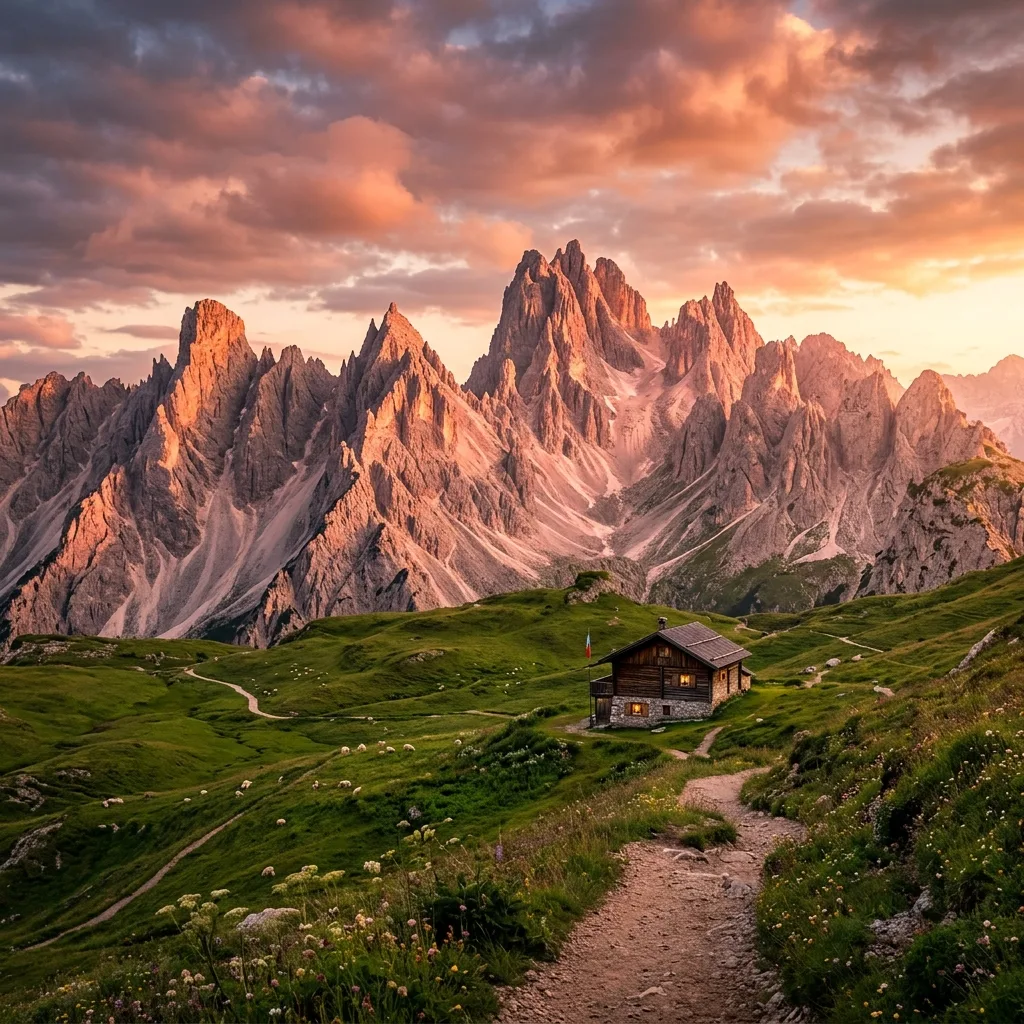
Hiking hut-to-hut along the Alta Via 1 between rifugios, watching the Tre Cime di Lavaredo towers turn rose-gold at sunset, and skiing the Sellaronda circuit through four valleys in a single day.
Vibe
Alpine, Dramatic & Cultured
Hiking Season
Mid-Jun – Sep
Getting Here
VCE or INN then drive
UNESCO
World Heritage Site
The Honest Pitch
The Dolomites are genuinely crowded in July and August. Lago di Braies — the emerald lake at the start of the Alta Via 1 — has a timed entry system in peak season.
The Honest Pitch
The Dolomites are genuinely crowded in July and August. Lago di Braies — the emerald lake at the start of the Alta Via 1 — has a timed entry system in peak season. The Tre Cime di Lavaredo car park charges steep access fees and fills before 9am. The most popular rifugios book out six months ahead.
Getting Here
VCERecommended
Venice Marco Polo Airport
2hr drive to Cortina · 2.5hr to Val Gardena
2hr drive to Cortina · 2.5hr to Val Gardena
INN
Innsbruck Airport
1.5–2hr drive to northern valleys
1.5–2hr drive to northern valleys
VRN
Verona Villafranca Airport
2–2.5hr drive via A22
2–2.5hr drive via A22
A rental car gives the most freedom for exploring multiple valleys and passes, which is how the Dolomites rewards properly. Public transport works well for single-valley stays — Bolzano is the public transport hub with trains from Venice, Verona, Innsbruck, and Munich, and bus connections to most major valleys. In ski season, free shuttle buses connect accommodations to all lift stations across the Dolomiti Superski network. Note that some mountain passes are closed to private vehicles at peak times in summer — check current ZTL (restricted traffic zone) rules for Tre Cime di Lavaredo and Alpe di Siusi before you drive.
Seasonal Conditions
When to visit
Bar height = overall visitability. Color = conditions tier.
From June through August, thunderstorms build over the Dolomites almost every afternoon from around 2pm. This is not unusual — it is the normal alpine summer pattern. Start hikes by 7 or 8am, plan to be at or near a rifugio or in the trees by 1pm. Via ferrata in particular must never be attempted in lightning conditions — wet and icy iron rungs on exposed faces are the primary hazard.
September Is the Month the Dolomites Belongs to Hikers
After the first week of September, crowds drop dramatically, all trails and most rifugios remain open, the light on the limestone towers turns golden and warm, and the larch forests begin their autumn colour. It is the finest month in the range and consistently overlooked by those who book in February for July.
The single best month in the Dolomites — crowds thin sharply after the first week
All trails and rifugios still open through most of the month
Golden September light on the limestone — the finest photography conditions of the year
Via ferrata still fully accessible with excellent rock conditions
First autumn colour on the larch forests from mid-September
Workable
Some rifugios close progressively from mid-September onward — check closing dates
First cold nights at altitude — carry warm layers even on dayhikes
Skip
Nothing — September is the answer when experienced visitors are asked when to come
The larch forests of the Dolomites in late September — lemon yellow against the pale grey towers, the meadows empty, the rifugios quieting toward their closing dates — is the Dolomites at its most purely beautiful and least crowded, and it is consistently missed by the July planners.
Getting Here
VCERecommended
Venice Marco Polo Airport
2hr drive to Cortina · 2.5hr to Val Gardena
2hr drive to Cortina · 2.5hr to Val Gardena
INN
Innsbruck Airport
1.5–2hr drive to northern valleys
1.5–2hr drive to northern valleys
VRN
Verona Villafranca Airport
2–2.5hr drive via A22
2–2.5hr drive via A22
A rental car gives the most freedom for exploring multiple valleys and passes, which is how the Dolomites rewards properly. Public transport works well for single-valley stays — Bolzano is the public transport hub with trains from Venice, Verona, Innsbruck, and Munich, and bus connections to most major valleys. In ski season, free shuttle buses connect accommodations to all lift stations across the Dolomiti Superski network. Note that some mountain passes are closed to private vehicles at peak times in summer — check current ZTL (restricted traffic zone) rules for Tre Cime di Lavaredo and Alpe di Siusi before you drive.
Ready to plan your trip?
Tell us when and how you travel — we'll match it to the right months, the right properties, and the right price.
Where to Stay
Hotels & Lodges
Alpe di Siusi
High-Alpine Meadow (Alpe di Siusi)
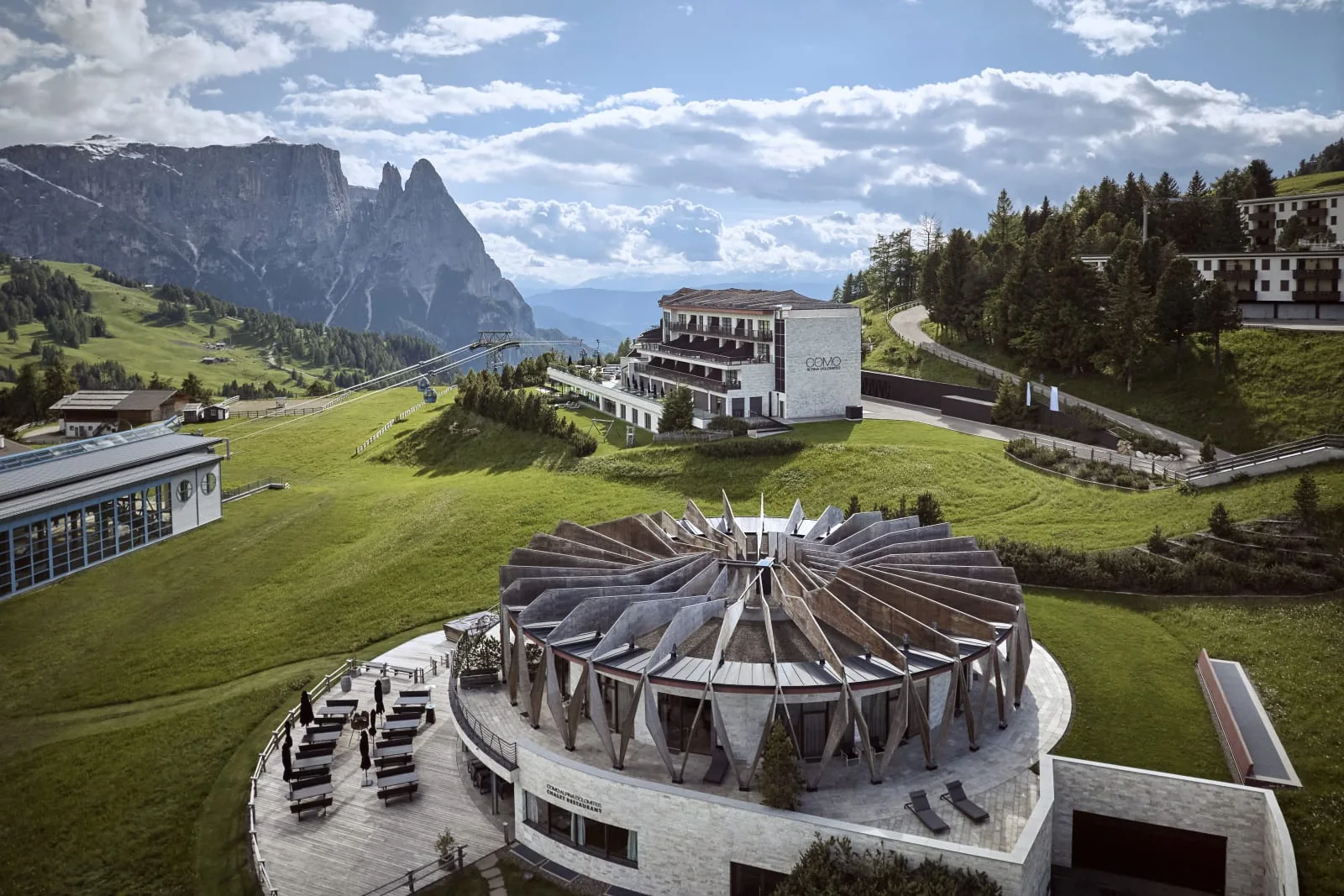
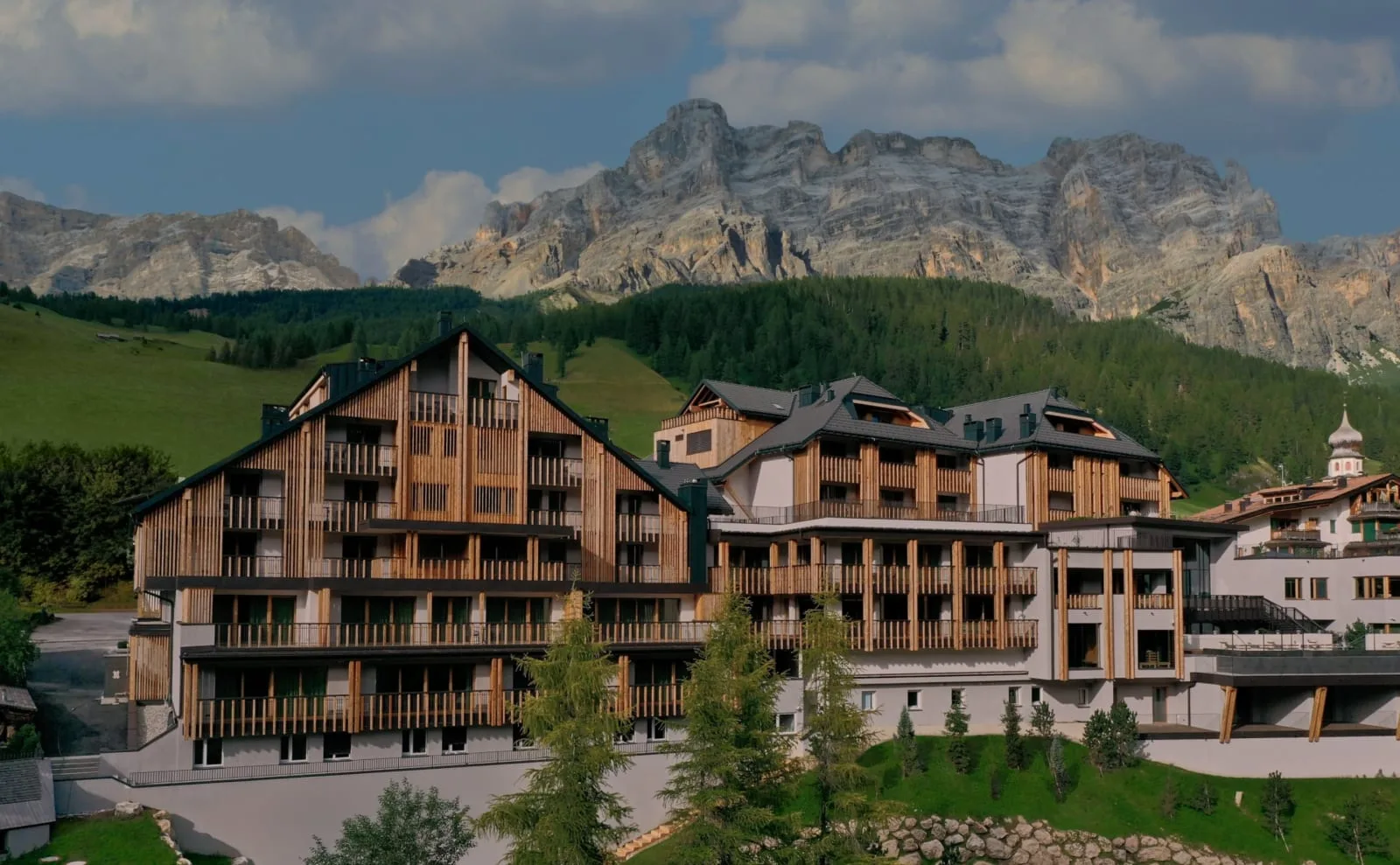
COMO Alpina Dolomites
A ski-in/ski-out wellness sanctuary floating on Europe's largest high-altitude alpine meadow.
Book rifugios for July and August in the previous August
The most popular huts on the Alta Via 1, the Tre Cime circuit, and the Sellaronda routes accept bookings from August the year before the season. July and August dates at Rifugio Locatelli, Rifugio Fanes, and the other marquee huts fill completely within weeks. If you are planning a July or August hut-to-hut trek, your booking window opens 11 months before your hike. For September, the situation is easier — book 3 to 4 months ahead.
Book Aug for Following Summer
02
Via ferrata requires specific kit — not optional
A harness, a via ferrata set (Y-shaped lanyard with an energy-absorbing element), and a climbing helmet are mandatory on all via ferrata routes. Standard hiking poles and backpacks are not a substitute. Hire kit is available in Cortina, Ortisei, and other major villages. Never attempt a via ferrata route if rain, thunderstorm, or ice is forecast — wet iron rungs are a serious hazard, and the afternoon thunderstorm pattern in summer makes timing critical.
Proper Kit Required
03
April, May, and November are genuine off-season
The Dolomites operate on two seasons: hiking (mid-June to early October) and skiing (December to late March). The months in between are when most mountain facilities — rifugios, cable cars, ski lifts, shuttle buses — are closed for maintenance. The valleys and lower towns are accessible and pleasant, but the mountain infrastructure that makes the Dolomites extraordinary is largely absent. If you are visiting in these months, plan a valley-based itinerary rather than a mountain one.
Two Seasons Only
Reference
Month by Month — The Dolomites, Italy
Jan
Ski season at full operation across Dolomiti Superski
Feb
Peak snow conditions across the ski area
Mar
Late ski season — often the most enjoyable month on the slopes for experienced skiers
Apr
Walking in low valleys and around lake edges as snow retreats
May
Lower trails accessible from mid-May on south-facing slopes
Jun
Hiking season officially beginning from mid-June — trails and rifugios progressively opening
Jul
All trails and rifugios open — the full Dolomites accessible
Aug
Full season operation — all rifugios, lifts, and trails open
Sep
The single best month in the Dolomites — crowds thin sharply after the first week
Oct
Peak autumn colour in the valley forests — larches and deciduous trees in full gold
Nov
Bolzano Advent market opens in late November — one of the finest in Europe
Dec
Ski season opening from early December across Dolomiti Superski
Decision Guides
Head-to-Head Comparisons in The Dolomites, Italy
Direct comparisons of rates, atmosphere, and setting to help you pick the right property.