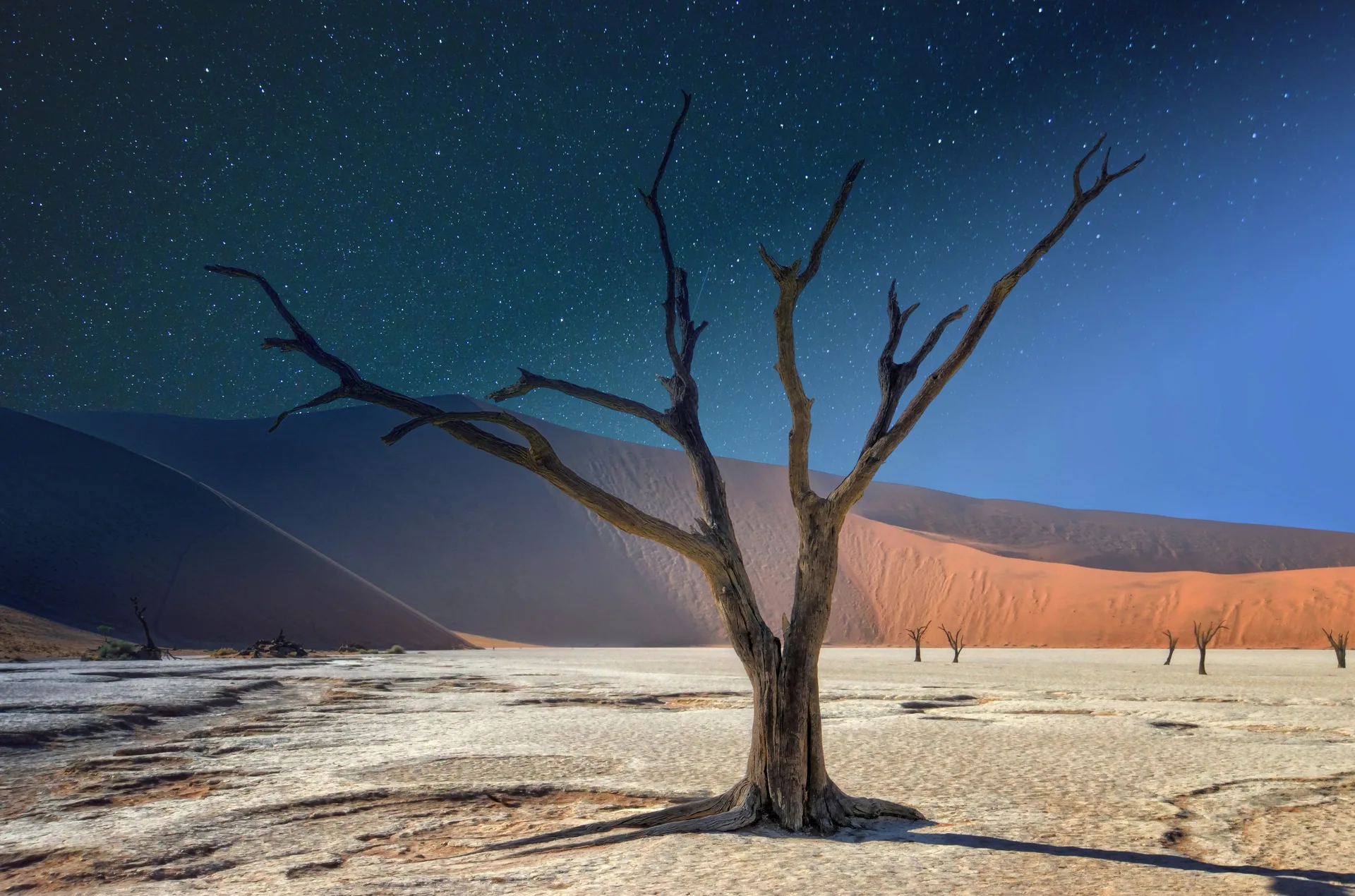
Namib Desert, Namibia
Climbing the monumental crest of Dune 45 at sunrise, tracking desert-adapted elephants along dry riverbeds, and stargazing inside the dark-sky NamibRand Nature Reserve.
Namibia's desert interior is a realm of magnificent silence and giant dunes, but the summer heat from November to March regularly climbs past 95°F, making outdoor dune climbing dangerously hot by mid-morning. The remote locations mean road travel involves long, jarring drives on gravel roads where flat tires are common, so private fly-in charters are highly recommended.
Namibia's desert interior is a realm of magnificent silence and giant dunes, but the summer heat from November to March regularly climbs past 95°F, making outdoor dune climbing dangerously hot by mid-morning. The remote locations mean road travel involves long, jarring drives on gravel roads where flat tires are common, so private fly-in charters are highly recommended. Stays at premium dune sanctuaries like Zannier Sonop must be booked 10 to 12 months in advance for the dry winter peak.
When to visit
Bar height = overall visitability. Color = conditions tier.
Winter (May–September) is the optimal window to visit the Namib. Daytime temperatures are pleasant (highs in the 70s and low 80sF) and clouds are virtually non-existent, creating optimal dark sky viewings.
Summer (November–March) pushes temperatures past 95°F with high UV ratings. If traveling during these months, restrict outdoor activities to early morning hours and stay hydrated.
What's good, and when
May: Winter Arrival
Ready to plan your trip?
Tell us when and how you travel — we'll match it to the right months, the right properties, and the right price.
Hotels & Lodges
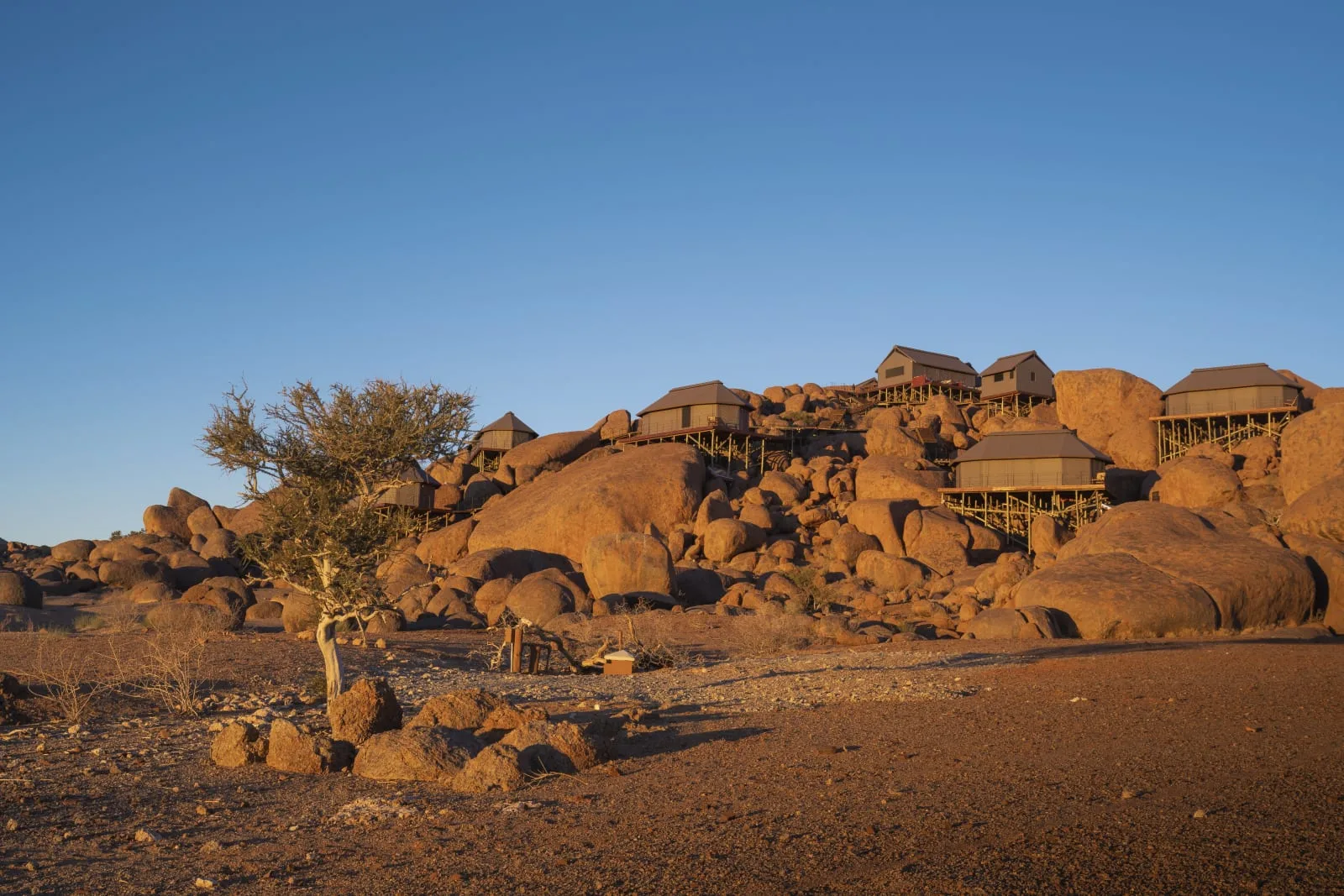
Zannier Hotels Sonop
A 1920s-style luxury tented lodge perched on granite boulders overlooking the red sands of the Namib Desert.
The Reality Check
Dress in layers for day-to-night swings
The dry desert air results in rapid cooling after sunset. While winter days are pleasantly warm around 78°F, nighttime temperatures routinely drop to 49°F, requiring warm thermal jackets for evening stargazing.
Pack Warm Layers for NightsBring sealed bags for electronics
The fine, dry desert sand of the Namib easily gets into camera lenses, phone ports, and zippers. Always keep sensitive gear sealed inside zip-lock bags when hiking or driving through open dune areas.
Seal Electronic Gear in DustbagsDeadvlei requires a 4x4 shuttle
The final 4km track to Deadvlei consists of extremely deep, soft sand that traps normal cars. Unless you are an experienced sand driver in a high-clearance 4x4, park at the 2WD lot and board the park's official tractor shuttles.
Take the Deadvlei 4x4 Shuttle